The UK Solar Industry Was Tested in 2025, Why 2026 Could Be the Year That Defines Us

Let me be honest.
If you worked in the UK solar industry in 2025 and felt exhausted, frustrated, or uncertain at times, you were not alone. From the outside, solar looked strong. Demand was visible. Net zero remained a national priority. Technology kept improving. But inside the industry, many of us were under pressure from every direction at once.
Margins tightened. Cash flow became harder to manage. Pricing wars intensified. Skills shortages remained unresolved. Regulation struggled to keep pace with technology. Some good companies survived by adapting fast. Others, unfortunately, did not.
And yet, despite everything 2025 threw at us, I firmly believe 2026 can be a defining year for UK solar, if we choose collaboration over fragmentation.
Demand Was Never the Problem
One of the biggest misconceptions about 2025 is that demand slowed.
It didn’t.
More than 1.3 million UK homes now have solar, yet that represents less than 5 percent of total households. Residential battery storage attachment rates are now estimated to be above 50 percent on new installs, showing that customers are no longer thinking only about generation, but about control, resilience, and long-term energy security.
UK electricity prices remain among the highest in Europe, and commercial energy users are increasingly viewing solar and storage as a strategic necessity, not a sustainability add-on. This tells us something critical for the future of UK solar. The market is still early-stage, but expectations have matured rapidly.
The issue in 2025 was not demand. It was stability across the supply chain.
The Solar Customer Has Changed
In my conversations with homeowners and businesses throughout 2025, I noticed a clear shift.
Customers are no longer asking, “Is solar worth it?”
They are asking:
- How much energy can I store
- How do I maximise self-consumption
- How do I integrate EV charging and future technologies
- How do I protect myself from future grid instability
This is a more informed customer, but also a more demanding one. It requires better system design, higher installation quality, clearer education, and long-term thinking.
Selling panels alone is no longer enough. Energy systems are now the product.
Technology Is Reshaping the UK Solar Market
One of the strongest indicators of where the UK market is heading is the attention it is now receiving from global technology leaders.
The expansion and entry of companies such as AIKO, SigEnergy, Sungrow, Tesla Powerwall, and Haier into the UK market is not a coincidence. These companies invest where they see long-term opportunity, grid pressure, and policy direction, even if imperfect. Their presence confirms a major shift.
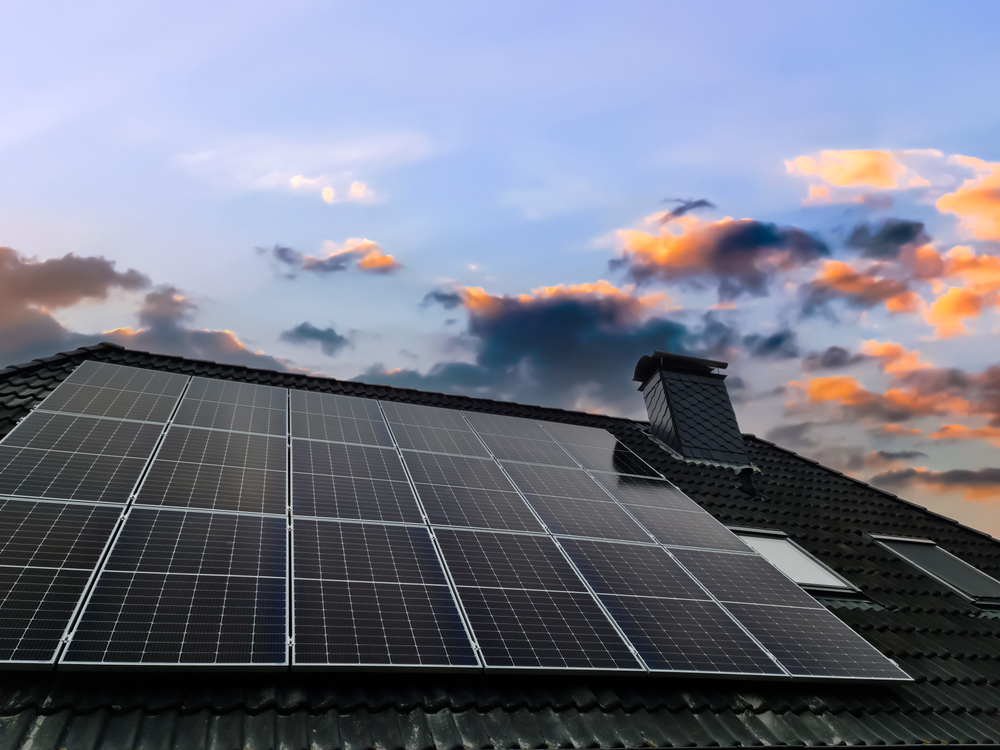
The future of solar in the UK is not just about panels on roofs. It is about integrated energy ecosystems, solar, storage, EVs, heat pumps, AI-driven energy management, and grid flexibility working together.
UK Companies Still Play a Critical Role

Alongside global manufacturers, the UK has strong companies shaping the solar and storage market across residential, commercial, and utility-scale projects.
Energy suppliers and integrators like Octopus Energy have helped bring solar and storage into the mainstream. Commercial specialists such as Geo Green Power and Joju Solar continue to raise standards. Developers like Lightsource bp and RES are essential for long-term deployment and grid-scale progress.
And then there are companies like Sol4r Energy Ltd, working daily on real installations, system design, customer education, and long-term trust. This industry is built by people doing the work properly, not just chasing volume.
Distributors Were the Unsung Backbone of 2025
Distributors carried enormous pressure throughout the year. They absorbed pricing volatility, held stock risk, extended credit during tight financial conditions, and supported installers through rapid technology changes. Without strong distributors, the UK solar supply chain simply does not function.
If 2026 is to be stronger, we need healthier pricing models, better forecasting, and deeper collaboration between manufacturers, distributors, and installers.
“A race to the bottom benefits no one”
Certification and Standards Must Evolve

Standards and consumer protection are essential. But certification frameworks must evolve with the pace of technology. MCS bodies and certification partners need to move faster with new technologies, reduce unnecessary friction for competent installers, and focus more on installation quality and outcomes rather than excessive administration.
If we want scale, trust and efficiency must grow together.
Events, Growth, and New Entrants
2025 was full of industry events, exhibitions, and networking opportunities. One positive trend was the number of new people entering the solar and storage sector. This is encouraging. It shows belief in the industry. However, systems are becoming more complex, and experience matters. As pioneers in the UK solar market, we have a responsibility to support newcomers, share knowledge, and protect standards, not dilute them.
Compared to Europe, Asia, and Africa, the UK solar industry is still relatively small in deployment scale. But momentum is building, investment is increasing, and the market is shaping well.
Net Zero 2030, Time Is Running Out
2030 is closer than many realise.
To get anywhere near net zero, government action must improve through long-term policy certainty, faster grid connections, simplified planning processes, stronger support for storage and flexibility, and significant investment in skills and training.
The industry is ready to deliver. But it cannot do it alone.
Why I Am Optimistic About 2026
Despite the challenges of 2025, I remain optimistic.
Technology is advancing rapidly.
Customers are ready.
Global manufacturers are committed.
UK companies are adapting and learning fast.
But the success of 2026 depends on one thing above all else.
Collaboration over competition

Installers, distributors, manufacturers, certification bodies, and government must work together, share insight, raise standards, and support each other. Solar is not a zero-sum game. If the industry grows the right way, everyone benefits.
2025 tested us.
2026 can define us, if we choose to work together.
Author: Salah Khan